

7 min read • By Dr. Kevin Baharvand, Diplomate, American Board of Orthodontics
SHORT ANSWER
Most of the useful vetting happens before you book anything, and it takes about fifteen minutes online. Confirm the person completed an orthodontic residency, not just dental school. Check whether they are board certified, while understanding that plenty of good orthodontists are not. Read reviews for how the office runs rather than for clinical quality, because patients cannot judge that. Then book two consultations for anything complex, and compare the reasoning rather than the price.
ON THIS PAGE
There is a lot of advice out there telling you to ask about your orthodontist’s philosophy of care. That is a fine question and you will get a fine answer, and it will not help you choose. What follows is the stuff that actually differentiates one office from another. If you want the separate list of what to ask once you are sitting in the chair, that is covered here.
Check the training first, it takes two minutes
In Texas, a general dentist can legally provide orthodontic treatment, including aligners and braces, without completing an orthodontic residency. That surprises most people. It means the single highest-value thing you can check is whether the person treating you did the residency at all.
You are looking for two to three years of accredited postgraduate training after the dental degree, usually shown as an MS in orthodontics or a certificate in orthodontics. It is almost always on the bio page. If the bio talks about weekend courses, provider status with a particular aligner brand, or a number of cases completed, but never names a residency, that is your answer.
This is not a knock on general dentists. It is a different scope of training, and the difference shows up most on the cases that turn out to be more complicated than they looked at the start.
What board certification does and does not tell you
Certification by the American Board of Orthodontics means submitting completed cases to be judged by other orthodontists against a defined standard, then passing an examination. It is entirely voluntary, and only a minority of practicing orthodontists go through it. I did, and I will tell you what it actually signals: a willingness to have your finished work graded by people who know exactly what to look for.
What it does not signal is that non-certified orthodontists are worse. Plenty of excellent clinicians never sat for it because it is time-consuming and nothing requires it. Use it as a positive signal, not as a disqualifier.
Watch the wording on group practice websites. When two or more doctors are listed and the page says board certified without attaching it to a specific name, check each bio individually. Certification belongs to a person, never to a practice.
How to read reviews without being misled
Reviews are genuinely useful, just not for the thing people use them for. A patient can accurately tell you whether they waited forty minutes, whether the staff were kind, whether billing was a mess, and whether the office fixed a broken bracket the same week. Those things matter enormously over a two-year treatment.
What a patient cannot tell you is whether their roots were left parallel, whether the bite settled correctly, or whether the case was overtreated or undertreated. Almost nobody knows how good their own orthodontic result is. So a five-star average tells you the office runs well. It does not tell you the orthodontics is good.
Read the negative reviews specifically, and read the responses more than the complaints. How an office handles a bad outcome tells you what will happen when something goes wrong in your case, and something usually does at some point.
Red flags worth walking away from
| What you see | Why it matters |
|---|---|
| A firm timeline before any records are taken | You cannot plan a case from looking at the front teeth. A number given that fast is a sales figure, not an estimate. |
| Discount expires today | Pressure tactics on a two-year health decision. The price will be there next week. |
| Retainers quoted separately at the end | Retention is part of treatment, not an upsell. Ask what is included before you compare any two quotes. |
| You never actually meet the orthodontist | If the consultation is entirely with a treatment coordinator, you are being sold to before you are diagnosed. |
| One appliance for every patient | If every case somehow needs the same product, that is a business model rather than a diagnosis. |
The last row is worth dwelling on. Aligners and braces are both good tools, and a practice that recommends one of them to essentially everybody is telling you something about how it makes decisions.
The boring factors that decide whether you finish
Nobody puts this on a checklist and it is probably the most predictive thing on this page. Treatment lasts a year or two, with appointments every six to eight weeks, during school and work hours. If the office is forty minutes away in traffic and you can only ever get a two o’clock slot, you will start missing appointments. Missed appointments extend cases.
Ask what happens when a bracket breaks on a Friday. Ask whether you can be seen at a second location if one is closer to work. Ask whether after-school appointments genuinely exist or are theoretically available in three months. We run two offices in Frisco and one in The Colony partly for this reason, so patients can move between them depending on the week.
Then there is money. Ask for the total cost of finished treatment including retainers and any likely refinements, not the monthly payment. Monthly payments are easy to make look small by stretching the term. Our finance calculator will show you both numbers before you come in, and any office should be willing to do the same.
If you only do one thing from this page: open the bio and confirm there was a residency. Everything else is a refinement on top of that.
Frequently asked questions
How do I know if someone is actually an orthodontist?
Look for two to three years of accredited residency after dental school, listed as an MS or a certificate in orthodontics. A general dentist can legally provide orthodontic treatment in Texas without that residency, so the title on the door is not the same as the training behind it.
What does board certified actually mean?
It means passing the American Board of Orthodontics examination, which requires submitting finished cases for peer review by other orthodontists. It is voluntary, and a minority of orthodontists complete it. Plenty of excellent orthodontists are not board certified, so treat it as a strong positive signal rather than a filter.
Should I get more than one consultation?
For anything beyond a simple case, yes. Two opinions on a complex bite will sometimes differ in approach, and that difference is informative. If two offices propose very different plans, ask each of them why, and listen to whether the reasoning is clinical or commercial.
Do online reviews tell me anything useful?
They tell you about the front desk, the wait times, and how the office handles problems. They tell you almost nothing about clinical quality, because patients cannot evaluate the finish of their own case. Read them for operations, not for orthodontics.
Is the cheapest quote a bad sign?
Not automatically, but ask what is included. Retainers, records, emergency visits, and refinements are the line items that get excluded to make a headline number look better. Compare total cost of finished treatment, not the starting figure.
Does it matter if the office has newer technology?
Less than the marketing suggests. Scanners and 3D imaging are genuinely useful and now fairly standard. Technology does not diagnose your bite or plan your case. The person does.
Put us on your shortlist
Free consultation, real records, and a plan you can take to a second opinion if you want one. Two Frisco offices plus The Colony.
You may also be interested in these
- What Questions to Ask During an Orthodontic Consultation
- Orthodontist vs Dentist: Why It Should Be Left to the Experts
- Do All Orthodontists Charge the Same for Braces?
Why families trust Elate Orthodontics
1,000+ five-star reviews • 3 offices (two in Frisco, one in The Colony) • D Magazine Best Dentist 2026 • Living Magazine Readers’ Choice 2026
With over 1,000 five-star reviews across three locations, Elate Orthodontics is led by Dr. Kevin Baharvand, DMD, MS, a Diplomate of the American Board of Orthodontics, whose clinical work was recently selected for the cover of the American Journal of Orthodontics and Dentofacial Orthopedics, the most prestigious peer-reviewed journal in the field, and a national speaker on clear aligner treatment. Alongside Dr. Julia Kang, DMD, MS, both Boston University graduates and members of the Omicron Kappa Upsilon national honor society, our husband-and-wife team has been recognized as D Magazine Best Dentist 2026, Living Magazine Readers’ Choice 2026 Best Orthodontist in Frisco & Plano, Readers’ Choice Best Orthodontist in The Colony, Best New Business by the Chamber of Commerce, Nextdoor Neighborhood Favorite, and featured in Orthotown and Authority Magazine.
We serve families through three convenient offices in West Frisco, North Frisco, and The Colony, each staffed by the same trusted team, equipped with advanced technology, and committed to the personalized approach that consistently helps patients finish treatment sooner than expected. From braces and clear braces to Angel Aligners, we offer treatment for every age and every stage of life. We stay in-network with most insurance plans and offer flexible financing to make exceptional orthodontic care accessible for every family we serve.
Need general and family dentistry too? Our sister practice, Tribute Family Dentistry, provides dental care for all ages.
Book a free consultation: 972.538.4343
About the author
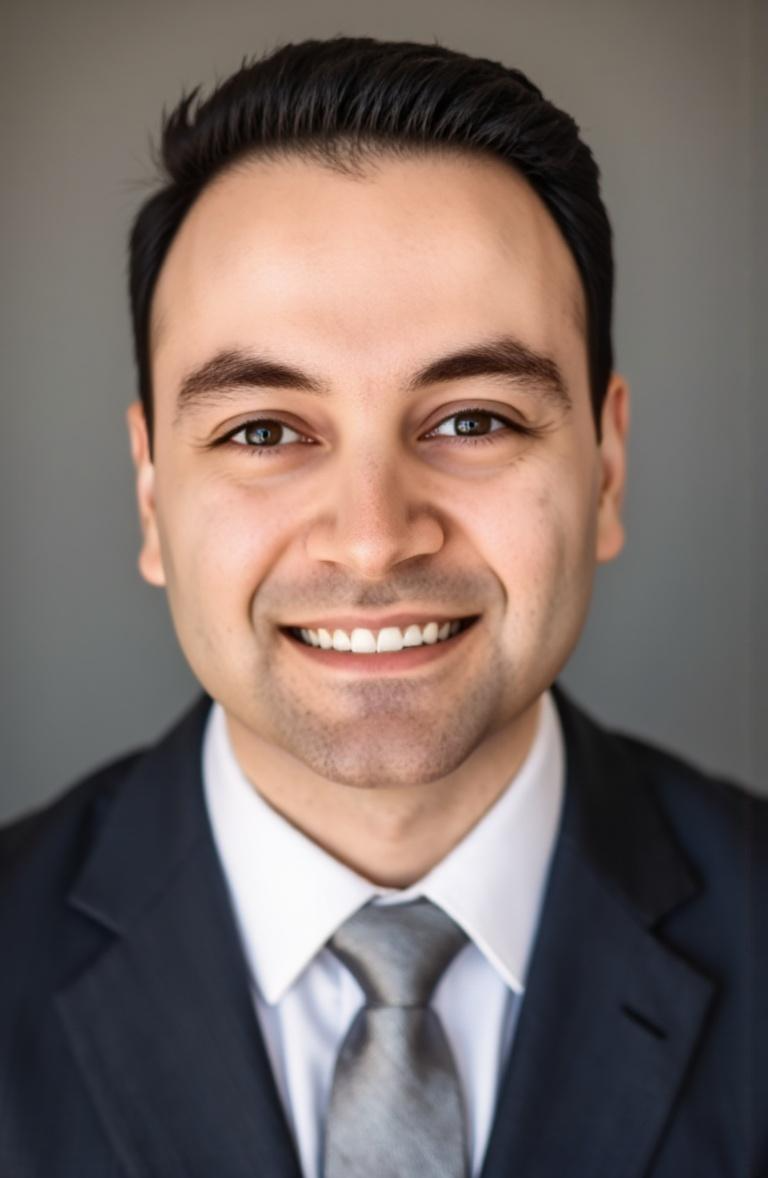
Dr. Kevin Baharvand, DMD, MS, is a Diplomate of the American Board of Orthodontics and a national speaker on clear aligner treatment. He practices at Elate Orthodontics in West Frisco, North Frisco, and The Colony, Texas.