


7 min read · By Dr. Kevin Baharvand, Diplomate, American Board of Orthodontics · Retainers & Aftercare
Short answer: Rinse your retainer with lukewarm water every time it comes out of your mouth, brush it gently with a soft toothbrush and mild soap, and give it a deeper soak two to three times a week. Never use hot water, toothpaste, or harsh chemicals. Clean it right and one retainer can last for years.
On this page
Why cleaning your retainer actually matters
Your retainer sits in your mouth for hours at a time, which means it collects everything your teeth do: saliva, plaque, food particles, and bacteria. Skip cleaning it and that film hardens into the same kind of buildup you get on teeth, except now it is sitting against your gums every night.
Three things go wrong with a dirty retainer. It starts to smell and taste off. It grows a bacterial and fungal layer that can irritate your gums and even contribute to bad breath. And that mineral crust slowly clouds a clear retainer until it looks foggy and worn. A clean retainer protects both your results from shifting and the health of the mouth holding it. The good news is that keeping it clean takes about two minutes a day.
How to clean each type of retainer
Not every retainer is cleaned the same way. Here is how to handle each of the common ones we fit at Elate.
Clear plastic retainers (Essix and Vivera)
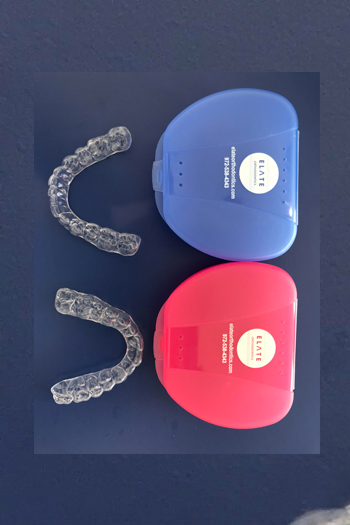
These are the see-through trays most people picture. Rinse right after you take the retainer out, before anything has a chance to dry on. Then brush the inside and outside gently with a soft toothbrush and a dab of clear, mild dish soap, and rinse thoroughly. For a deeper clean, soak in a retainer-cleaning solution or in equal parts white vinegar and lukewarm water for about 15 minutes. Because the plastic is thin, heat and abrasives are the enemy here. If you want the detail on how Vivera retainers work, we cover that separately.
Hawley retainers (acrylic with a wire)
The classic retainer with a colored acrylic base and a metal wire across the front. Brush the acrylic and the wire gently with a soft brush and mild soap, paying attention to where the wire meets the plastic since gunk hides there. Soak in a cleaning solution when it needs a refresh. The acrylic can warp with heat too, so stick with lukewarm water.
Permanent (bonded) retainers
This is the thin wire glued behind your lower or upper front teeth, so you cannot take it out to clean it. Brush around and behind the wire the same way you brush your teeth, then thread floss under it with a floss threader or use a water flosser to clear out what a brush misses. Because you cannot remove it, daily flossing here is not optional. It is how you keep plaque from building up along the wire.
| Retainer type | Everyday clean | Deep clean |
|---|---|---|
| Clear (Essix / Vivera) | Rinse + soft brush with mild soap | 15-min soak, vinegar-water or cleaner |
| Hawley (wire + acrylic) | Soft brush, focus on wire-to-acrylic seam | Soak in retainer solution |
| Permanent (bonded) | Brush + floss under the wire daily | Water flosser; professional cleaning |
Your simple daily and weekly routine
You do not need a complicated system. This is the whole thing:
- Every time you remove it: rinse under lukewarm water so nothing dries on.
- Once a day: brush gently with a soft toothbrush and a little mild soap, then rinse.
- Two to three times a week: a 15-minute soak in a retainer cleaner or diluted white vinegar to break down buildup.
- Always store it dry, in its case: a retainer left on a napkin gets thrown away, and one left in a hot car warps. The case exists for a reason.
When it is not in your mouth, it should be in its case. That one habit prevents the two most common ways retainers die: getting tossed with lunch, or getting stepped on.
Quick tip: keep a spare soft toothbrush with your retainer case, separate from the one you use on your teeth. It keeps toothpaste away from the plastic and makes the daily clean effortless.
What to never do to a retainer
Most retainers that come back ruined were killed by good intentions. Avoid these:
- Hot or boiling water. Heat warps the plastic permanently. No dishwasher, no microwave, no boiling to sterilize.
- Regular toothpaste. It is abrasive and scratches clear plastic, giving bacteria a place to hide and clouding the surface.
- Bleach or strong alcohol. These break down the material and can leave a residue you do not want in your mouth.
- Letting it dry out with buildup on it. Dried saliva and plaque are much harder to remove and can stain.
Stick to lukewarm water, a soft brush, mild soap, and gentle soaks, and you avoid nearly every retainer disaster we see.
Deep cleaning and ultrasonic cleaners
For the mineral haze that a normal clean will not budge, a longer soak in diluted white vinegar usually does the trick. Effervescent retainer-cleaning tablets are another easy option for a weekly refresh.
If you want a hands-off deep clean, an ultrasonic cleaner uses sound waves to lift debris out of every groove without scrubbing. They are not required, but many patients find them worth it, especially for clear trays. We break down which ones are actually worth buying in our guide to the best ultrasonic retainer cleaners. And if your retainer stays cloudy or smells no matter what you try, it may simply be worn out. That is a normal part of the lifecycle, and our overview of retainer types and costs covers what a replacement runs. For general guidance on caring for orthodontic appliances, the American Association of Orthodontists is a reliable place to read more.
A retainer is cheap insurance on years of orthodontic work. Two minutes of cleaning a day is what keeps that insurance valid.
Lost your retainer or noticed it no longer fits?
We can check the fit, clean it professionally, or make you a fresh set. Reach out and we will help you protect the smile you worked for.
Frequently asked questions
How often should I clean my retainer?
Rinse it under lukewarm water every time you take it out, and give it a deeper clean two to three times a week with a soft brush and a gentle soak. If your retainer smells or feels filmy, that is your cue it is overdue. Daily rinsing plus a couple of real cleanings a week keeps most retainers fresh.
Can I use toothpaste to clean my retainer?
It is best to skip it. Regular toothpaste is mildly abrasive and leaves tiny scratches where bacteria settle in, which clouds clear retainers over time. Use a soft toothbrush with plain water or a little mild, clear dish soap instead, then rinse well.
Can I soak my retainer in mouthwash?
Only briefly, and only diluted. Most mouthwashes contain alcohol, which can dry out and cloud clear retainer plastic if you soak too long. A short rinse is fine, but a dedicated retainer cleaner or a mild soap-and-water clean is gentler for everyday use.
How do I get rid of white buildup or cloudiness?
That white film is usually mineral buildup, similar to the tartar on teeth. A soak in equal parts white vinegar and water for 15 to 20 minutes, followed by a gentle brush, breaks most of it down. An ultrasonic cleaner handles it faster. If the cloudiness will not lift, the retainer may simply be worn out and due for a replacement.
Can I use boiling water or the dishwasher to sterilize it?
No. Heat is the fastest way to ruin a retainer. Boiling water, the dishwasher, a hot car dashboard, and the microwave all warp the plastic so it no longer fits. Always use lukewarm, never hot, water.
Do I really need an ultrasonic cleaner?
Not required, but a lot of patients like them for a hands-off deep clean. If you are curious which ones are worth it, we compare options in our guide to the best ultrasonic retainer cleaners. For most people, a soft brush and a good soak do the job just fine.
You may also be interested in these
Why families trust Elate Orthodontics
1,000+ five-star reviews · 3 offices (two in Frisco, one in The Colony) · D Magazine Best Dentist 2026 · Living Magazine Readers’ Choice 2026
With over 1,000 five-star reviews across three locations, Elate Orthodontics is led by Dr. Kevin Baharvand, DMD, MS, a Diplomate of the American Board of Orthodontics, whose clinical work was recently selected for the cover of the American Journal of Orthodontics and Dentofacial Orthopedics, the most prestigious peer-reviewed journal in the field, and a national speaker on clear aligner treatment. Alongside Dr. Julia Kang, DMD, MS, both Boston University graduates and members of the Omicron Kappa Upsilon national honor society, our husband-and-wife team has been recognized as D Magazine Best Dentist 2026, Living Magazine Readers’ Choice 2026 Best Orthodontist in Frisco & Plano, Readers’ Choice Best Orthodontist in The Colony, Best New Business by the Chamber of Commerce, Nextdoor Neighborhood Favorite, and featured in Orthotown and Authority Magazine.
We serve families through three convenient offices in West Frisco, North Frisco, and The Colony, each staffed by the same trusted team, equipped with advanced technology, and committed to the personalized approach that consistently helps patients finish treatment sooner than expected. From braces and clear braces to Angel Aligners, we offer treatment for every age and every stage of life. We stay in-network with most insurance plans and offer flexible financing to make exceptional orthodontic care accessible for every family we serve.
Need general and family dentistry too? Our sister practice, Tribute Family Dentistry, provides dental care for all ages.
Book a free consultation: 972.538.4343
Dr. Kevin Baharvand, DMD, MS
Diplomate of the American Board of Orthodontics and a national speaker on clear aligner treatment. Dr. Baharvand practices at Elate Orthodontics in West Frisco, North Frisco, and The Colony, where he and Dr. Julia Kang lead a team focused on airway-friendly, patient-first orthodontic care. Meet Dr. B.